








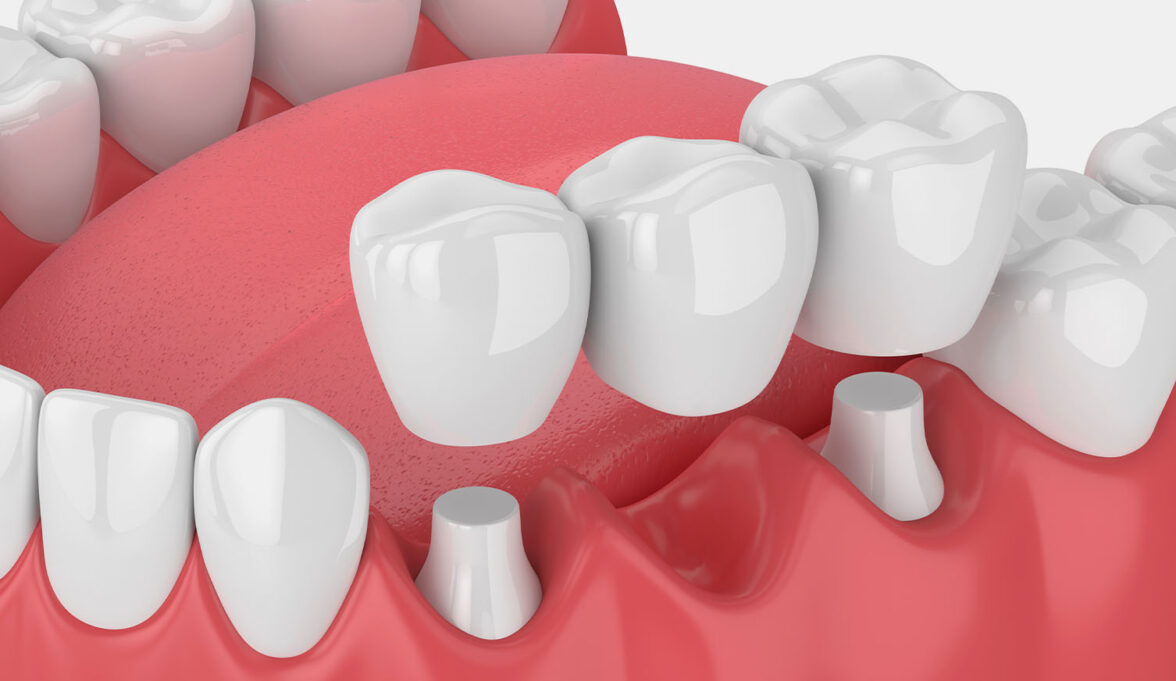
Bridges are custom-made to suit your smile arch and tooth shade and can be found in a variety of shapes and sizes.
A bridge can be categorised into three different types in dentistry: bonded, cantilever, and implant-retained. Some simple definitions are detailed below:
In addition to lowering your self-confidence, missing teeth can cause other issues. Your remaining teeth may become more stressed and at greater risk of decay if they are adjacent to a gap.
Furthermore, dental bridges prevent adjacent teeth from drifting, improve oral hygiene, and prevent food from accumulating between teeth.
Bonded bridges or winged bridges require two visits.
You will receive a scan or mould of your mouth from your dentist so that a dental technician can take accurate impressions. Your dentist might prepare your adjacent teeth to the correct shape during your first visit.
We will schedule an appointment for two weeks after your new bridge arrives to make sure you are satisfied with its appearance. In this case, your dentist will carefully examine your bite and place the bridge using a strong adhesive.
Back to General Dentistry“After a number of visits regarding dental problems& seeing both H&Mr Mohammed Mansor, I...”

“Had root canal done here after being sent by the emergency dentists, totally painless...”
“Brilliant dentist, from the very beginning every detail of my treatment was discussed clearly...”
“Been coming here for a few years now, always been happy, good with the...”
“Excellent care and treatment were received during 3 recent appointments with Mohammed Mansoor. I...”
“I have been to Clarence Rd Dental care for 30 years now and they...”